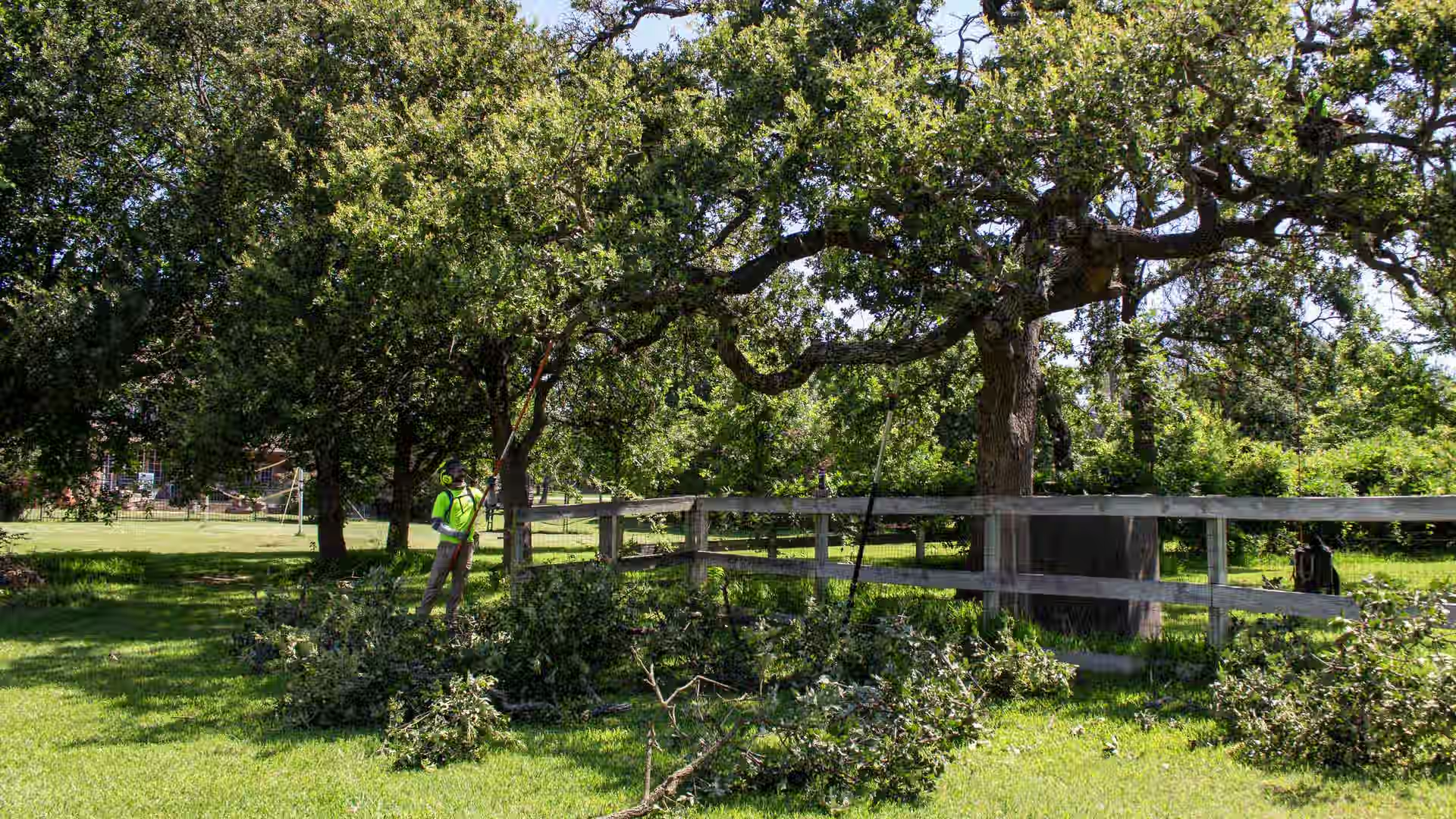
Choosing a tree to plant in North Texas should be based on the trees that grow well in your neighborhood and the surrounding area. Observation trumps any online search or recommendation by your local nursery. What grows well naturally in your neighborhood and area is the choice that will thrive and provide shade and beauty for years to come.
Where to Look for Answers
You might be tempted to search online for “trees that grow well in North Texas” or something similar. But we recommend that you do something more organic. Take a walk. Begin with your neighborhood. Take note of the trees that are thriving in your area.
We also recommend that you look beyond your neighborhood. Check out a nearby forest or naturally preserved area that is within 15 to 30 minutes of your home. The trees growing in these areas grew from a seed and are well-adapted to your area.

What to Look For
If you want a big tree, look for a big tree. If you are concerned about a mess in your yard, look on the ground, notice what has fallen and how much. (This is best done in the fall when acorns and other fruits drop). If you desire flowers, go for a walk in the spring and look for flowers. Almost any question you have can be answered with observation.
A list of common trees that you might encounter on a walk in Flower Mound and the larger Denton County area:
- Red Oak
- Live Oak
- Water Oak
- Pecan
- Cedar Elm
- Lacebark Elm
- American Elm
- Magnolia
- Maple
- Eastern Red Cedar
- Red Bud
These species are also widely available at quality nurseries in North Texas.
How to Identify a Tree Using Technology
Once you have found a tree that you like, take a picture, and put that picture into an AI tool or Google. Picture This is a good plant ID app, although AI can often do it for free for you. While all AI tools are not 100% accurate and depend largely on a good photo of the tree, they are fairly reliable.
The best photos are ones that show:
- Leaf Shape
- Leaf clusters
- Bark color and pattern
- Growth Pattern
- Any fruit or nut that may be laying on the ground nearby.
Before Making a Final Decision
While you might discover many tree species that thrive in the area, it is a good idea to survey your property and ask several questions of yourself.
- Where will the tree be planted?
- Are there any power lines above or near the intended location? Could the tree’s canopy eventually grow into the lines?
- Will the root system encounter obstacles? Are driveways or sidewalks far enough away from the eventual Critical Root Zone?
- Will the tree, at maturity, cast shade on the grass, and will I care if the grass is affected?
- How will I provide the tree water, especially for the first 2 years?
- Will the tree have the needed sunlight to thrive?
Call Tree Shepherds! We Plant Trees, too.
If you have any questions or need some more advice about deciding on a tree, please call Tree Shepherds. We can make specific recommendations for your tree location and how to best care for it. We can even plant your tree for you.