Scientific Methods for Testing Tree Health
When a tree begins to decline, many homeowners assume it simply needs fertilizer or more water. While those treatments may help in some circumstances, it may not solve your tree’s problem and may actually contribute to the tree’s decline.
Professional lab testing removes much of the guesswork. By using a lab to analyze plant or soil samples, an ISA Certified Arborist gains understanding as to why a tree is struggling and can recommend treatments based on science rather than assumptions.
At Tree Shepherds in the Plant Health Care department, lab testing is one of the most valuable diagnostic tools we use to help homeowners throughout Flower Mound, Denton County, and North Texas protect mature, valuable trees.
Why Lab Testing for Plant Disease
There are many plant diseases and pathogens. Many are undetectable or cannot be identified without proper lab equipment.
Arborists can take 2 approaches when identifying a problem:
- Use experience to make a treatment plan. This can be effective in cases where there is specific field evidence supporting the diagnosis. This is less costly but may be less certain.
- Use lab results to identify a specific pathogen, which allows for a targeted treatment plan for that pathogen. This costs more but offers more certainty.
Based on the arborist’s observations, he or she may decide to test the roots, leaves, or branches to get a more complete picture of the tree’s condition.
Soil Testing for Tree Health
Soil testing provides a detailed picture of the root system’s environment. Lab analysis can measure:
- Soil pH
- Organic matter
- Macro and Micronutrients (such as Nitrogen)
- Soluble salts
- Soil texture
These results allow an ISA Certified Arborist to determine whether required nutrients are present in the soil and whether the tree species will thrive in that soil. Without soil testing, homeowners often apply additional fertilizer that does little to correct the underlying problem.
With soil testing, an ISA certified arborist can give a more accurate soil amendment recommendation.
Test Results To Treatment Plans
Laboratory reports are only part of the process. Test results must be interpreted alongside the tree’s species, age, location, and growing conditions.
Tree Shepherds’ ISA Certified Arborists may use lab testing to develop customized recommendations. Rather than recommending the same program for every landscape, treatments are designed specifically for your trees and soil conditions.
When Should You Test a Tree for Disease?
Just like humans, an ounce of prevention is worth a pound of cure. If you own a valuable or sentimental tree, you may want to have an arborist evaluate its health regularly. It can take months for a mature tree to show signs of decline in the canopy or on the trunk.
Having said that, if you notice any of the follow signs of disease, we suggest that you contact an ISA Certified Arborist immediately to have it evaluated.
Some signs of disease to look for:
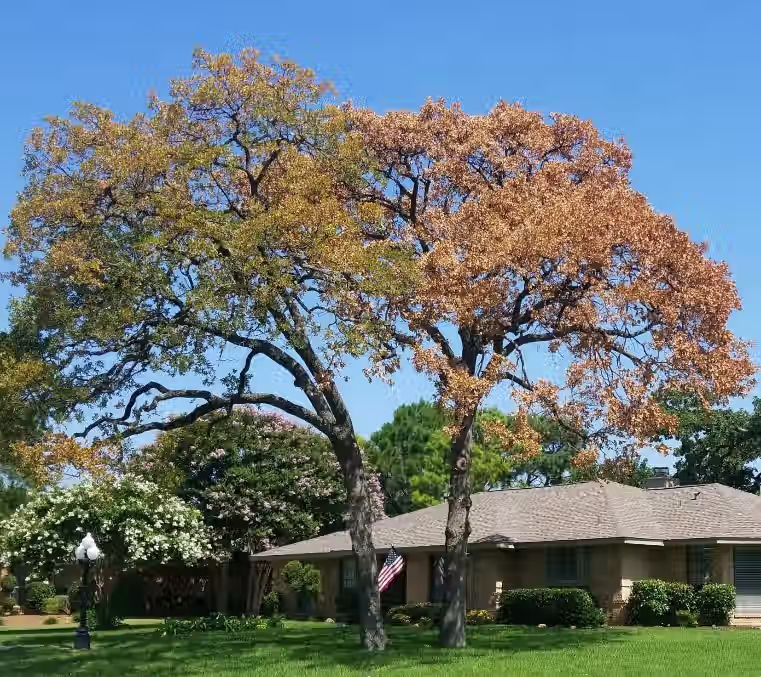
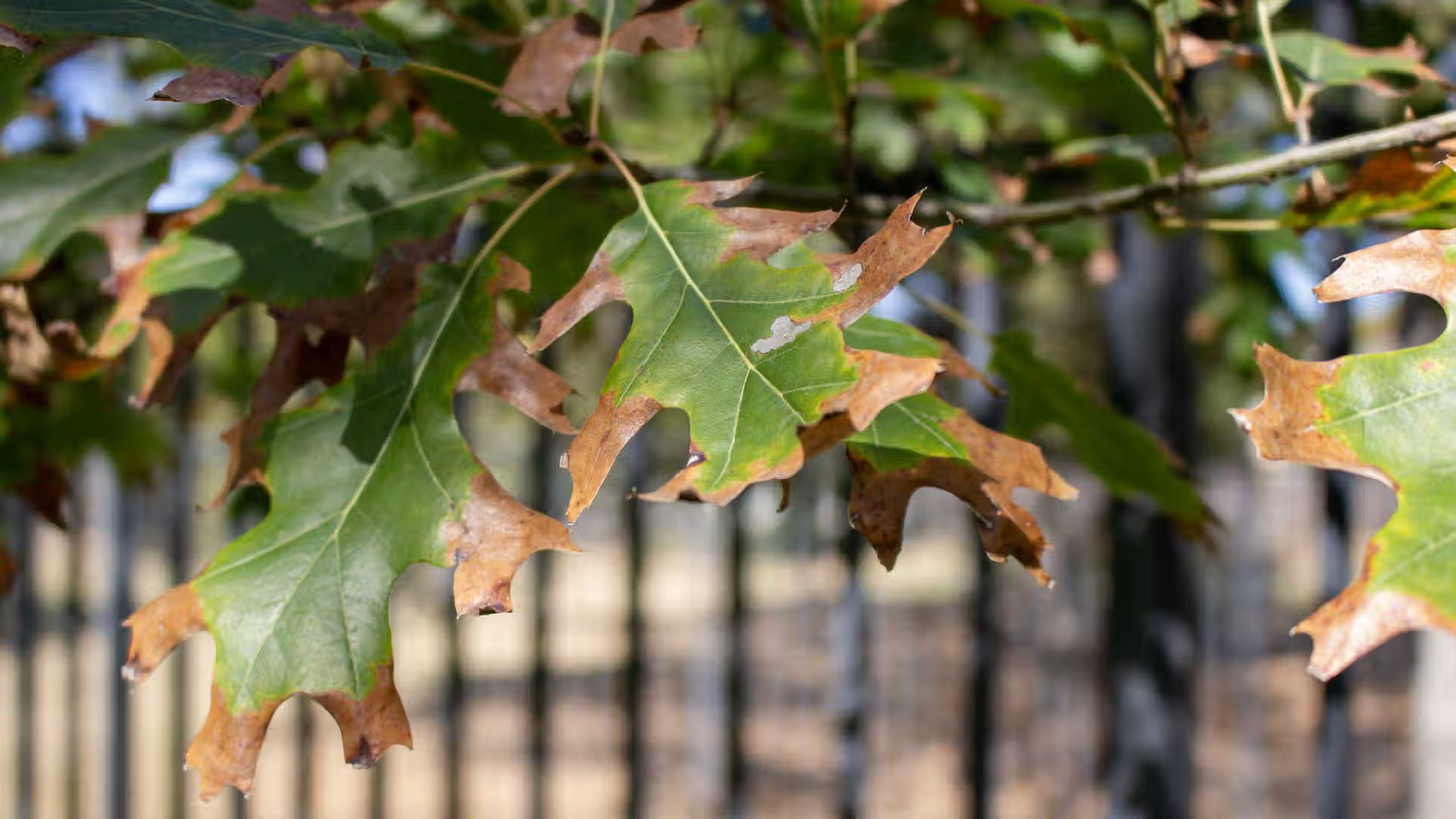
- Yellow or brown leaves in the summer
- Summer leaf drop
- Thinning canopy
- Small or abnormal leaf shape
- Discolored bark
- Sticky residue on or under the tree
- Fungi on the trunk and/or branches
Trust Tree Shepherds for Professional Testing and Treatment Plans
Professional diagnosis allows Tree Shepherds’ ISA Certified Arborists to diagnose problems accurately, avoid unnecessary treatments, and recommend solutions based on science instead of guesswork.
Since 2009, Tree Shepherds has helped homeowners throughout Flower Mound, Southlake, Grapevine, Trophy Club, Frisco, Denton County, and surrounding North Texas communities improve tree health through expert evaluations, soil testing, foliar analysis, and root inspections.
If your trees are struggling or you simply want to understand what’s happening beneath the surface, schedule an arborist consultation with Tree Shepherds.
Get a Free Estimate
on Tree Pruning & Trimming