Summer in Flower Mound means boiling temperatures and little rain. While most homeowners are diligent to water their landscape regularly during the hottest months, most homeowners water in a manner that is not good for tree health and longevity.
At Tree Shepherds, our ISA Arborists frequently diagnose declining trees that are suffering from improper watering practices. Avoiding common mistakes can help your trees thrive throughout the year. Proper watering practices can also save you money in tree care.
How Often Should You Water Trees During the Summer?
One of the most common mistakes is watering a little every day. Five to ten minutes of sprinkler use is not going to allow the water to reach the roots of a tree in a substantial way, especially if you have turf grass over the critical root zone of the tree.
Frequent, shallow watering encourages roots to remain close to the surface. Sustained hot temperatures lead to moisture evaporation near the surface of the soil. Trees with deeper roots have a much better chance of retaining moisture and therefore sustaining the ability to transport nutrients to the leaves and throughout the whole vascular system.
We recommend that you allow the water to soak into the soil slowly to penetrate deep into the soil. Depending on the type of soil, weather, and tree species, this usually means watering deeply once or twice a week, rather than daily. For more detailed information on how to set your sprinkler system, please check out our resources on the topic:
How to Water Your Trees in the Summer
Video: How to Set Your Sprinkler System for Trees
Where Should You Water Your Tree? (Hint: Not near the trunk)
Most homeowners place a hose directly against the trunk. This is not the best choice. The feeder roots, the most sensitive to moisture and nutrient absorption, are largely located beyond the canopy’s cover where the maximum amount of rain can be absorbed by the tree. (Less rain reaches the ground beneath the canopy.) Working with this built in design, water should be distributed across the larger root zone—near the dripline and beyond–instead of concentrated near the trunk.

Do Mature Trees Need Less Water?
Large, established trees are more drought tolerant than newly planted trees. However, they still need supplemental watering during periods of hot, dry weather.
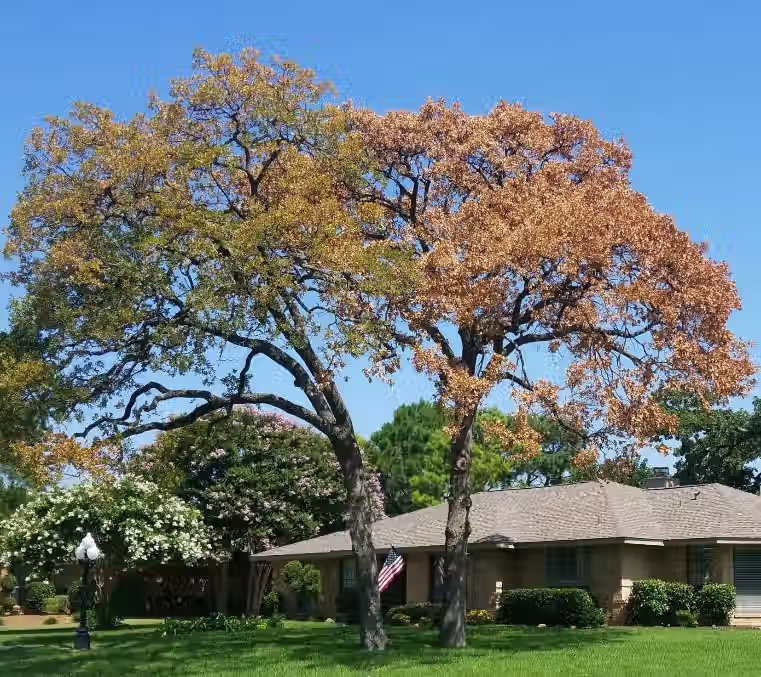
Years of drought and extreme summer temperatures have weakened many mature oaks, elms, pecans, and other North Texas shade trees. Without adequate moisture (from rain or watering), trees become more susceptible to insect infestations, disease, branch dieback, and premature decline.
Overwatering Clay Soils
North Texas soils often have high clay content. Clay holds water much more than sandy soils.
Watering too frequently can leave roots deprived of oxygen. Saturated soil encourages root decline and often leads to root rot problems. (See our article on phytophthora, a root rot disease common in North Texas).
To avoid overwatering, check soil moisture frequently. This can be done with a screwdriver. If the screwdriver goes in easily, the soil is moist. If there is resistance, the soil is dry.
If the soil is moist, wait a day or two before watering. Adjust your sprinkler system to accordingly. It might take some trial and error to establish an efficient schedule.
Forgetting Newly Planted Trees Need Extra Care
Newly planted trees have much smaller root systems than established trees. They are, therefore, more prone to not receiving the right amount of water. They can dry out more quickly but also can be more vulnerable to overwatering in clay soil.
Newly planted trees, of any size, require watering every few days during periods of extreme heat. A newly planted tree that misses several watering sessions during July or August can quickly become stressed. Follow the advice of an ISA Certified Arborist to ensure your specific tree gets the correct care for the first few years after planting.
Is There a Right Time of the Day to Water Your Trees?
The best time of the day to water trees is early in the morning.
Morning watering allows moisture to soak into the soil before heat of the day. This reduces evaporation while protecting susceptible plants from certain fungal diseases.
Avoid watering during the hottest part of the afternoon whenever possible. This conserves water.
Incorrect Use of Mulch
Mulch, properly applied, is a simple way to conserve soil moisture during the summer. Just 2 to 4 inches evenly spread over the root zone, but away from the trunk, can help:
- Reduce evaporation
- Moderate soil temperatures
- Improve soil structure over time
- Suppress weeds and grass that compete for water
It is important to keep mulch away from the trunk and root flares. Mulch volcanoes cause bark decay. Think of it as sugar on your teeth. You don’t want that! Keep mulch six inches away from the trunk and root flares.
Waiting Until the Tree Looks Stressed
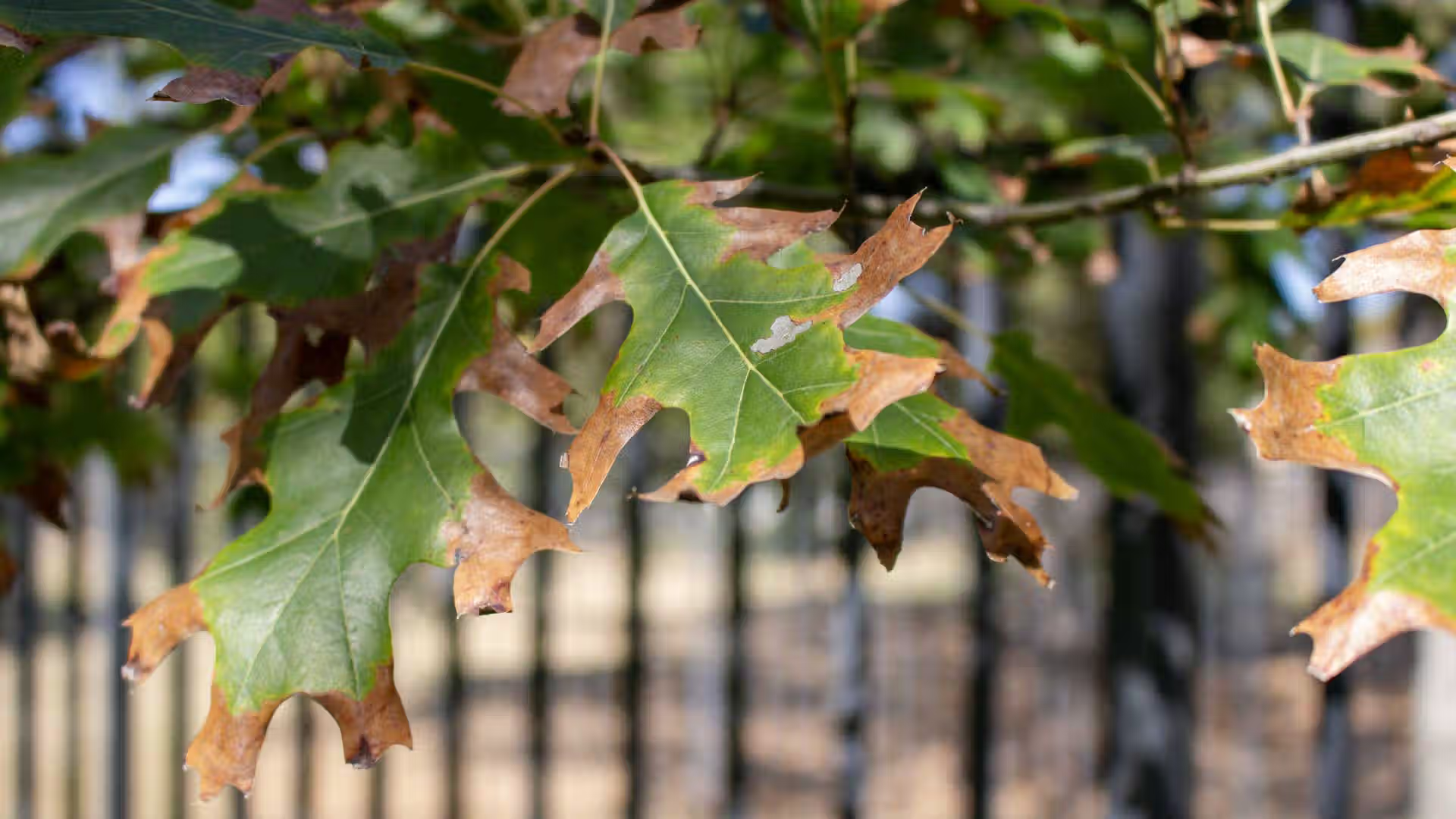
By the time leaves begin turning brown, wilting or dropping early, the tree has already been under stress.
Summer drought stress can weaken trees for months or even years. This sets them up for secondary problems, such as insect infestation, fungal diseases, branch failure and even premature death.
Regular watering before symptoms appear is the best approach to keeping your trees healthy and safe all year round.
When to Speak with an ISA Certified Arborist
Not every declining tree simply needs more water. Premature tree decline is usually caused by multiple factors.
If you’re unsure whether your trees are receiving enough water, one of the ISA Certified Arborists at Tree Shepherds can evaluate your trees and recommend the right course of action.
Since 2009, we have proudly served homeowners in Flower Mound, Denton, Southlake, Trophy Club, and the surrounding North Texas communities with expert tree care, tree pruning and removals, and tree and landscape evaluations.
Get a Free Estimate
on Tree Pruning & Trimming