
Category: Texas Trees
-
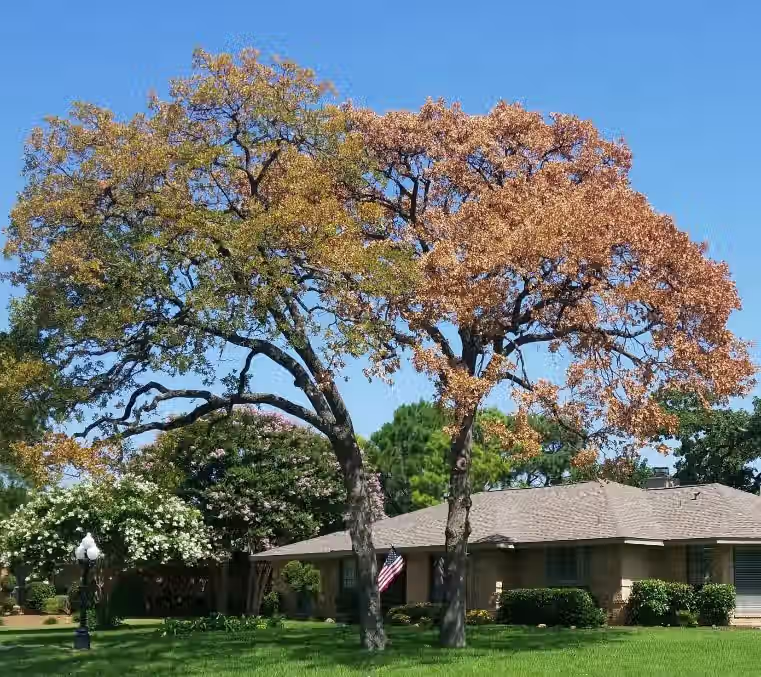
Summer Tree Watering Mistakes Flower Mound Homeowners Make
Summer in Flower Mound means boiling temperatures and little rain. While most homeowners are diligent to water their landscape regularly during the hottest months, most homeowners water in a manner that is not good for tree health and longevity. At Tree Shepherds, our ISA Arborists frequently diagnose declining trees that are suffering from improper watering…
-

Choosing the Right Tree for a North Texas Yard
Choosing a tree to plant in North Texas should be based on the trees that grow well in your neighborhood and the surrounding area. Observation trumps any online search or recommendation by your local nursery. What grows well naturally in your neighborhood and area is the choice that will thrive and provide shade and beauty…
-

Pine Trees in Lewisville and Flower Mound: Tree Care Tips
Slash and Loblolly Pines: Native to East Texas Slash pine and loblolly pine are the large pines that are seen growing in Lewisville and Flower Mound. These trees are native to the Southern Coastal Plain (East Texas eastward to the Atlantic) but can grow in North Texas if the soil conditions are right. Lewisville is…
-

Crape Myrtle: The Perfect Tree for Texas Landscapes
The crape myrtle (or crepe myrtle) has been called the perfect Texas landscape plant. It comes in a variety of sizes—from groundcover all the way up to a 35 ft tree. It produces clusters of glorious blooms. It’s disease resistant, drought tolerant, and grows fast in just about any soil type. And even the crape myrtle…
-

Trees for Small Yards
Which trees would we recommend for small yards in North Texas? Property owners in North Texas have many choices when it comes to tree species. For those that have limited space, we recommend that you consider the species listed below. Consulting with a ISA Certified Arborist is also a good idea, as there are many…
-

Privacy Trees and Shrubs for North Texas
Neighbors too close? No fences allowed by your H.O.A.? Street traffic a little too noisy? ISA Master Arborist and Tree Shepherds owner, Scott Geer has the following suggestion for trees and plants that can help make your landscape more private and less noisy. All the species recommended are evergreen, meaning they’ll add color to any…
-

Hackberry Trees: Dying or Under Attack?
Hackberry trees in Denton County are being hit by hard by moth larvae. The small green caterpillar eats the flesh out of the leaves, leaving only the veins. The defoliation can make a hackberry tree appear as if it is dying, but it is not. Pest populations fluctuate along with predator populations. The last time…
-
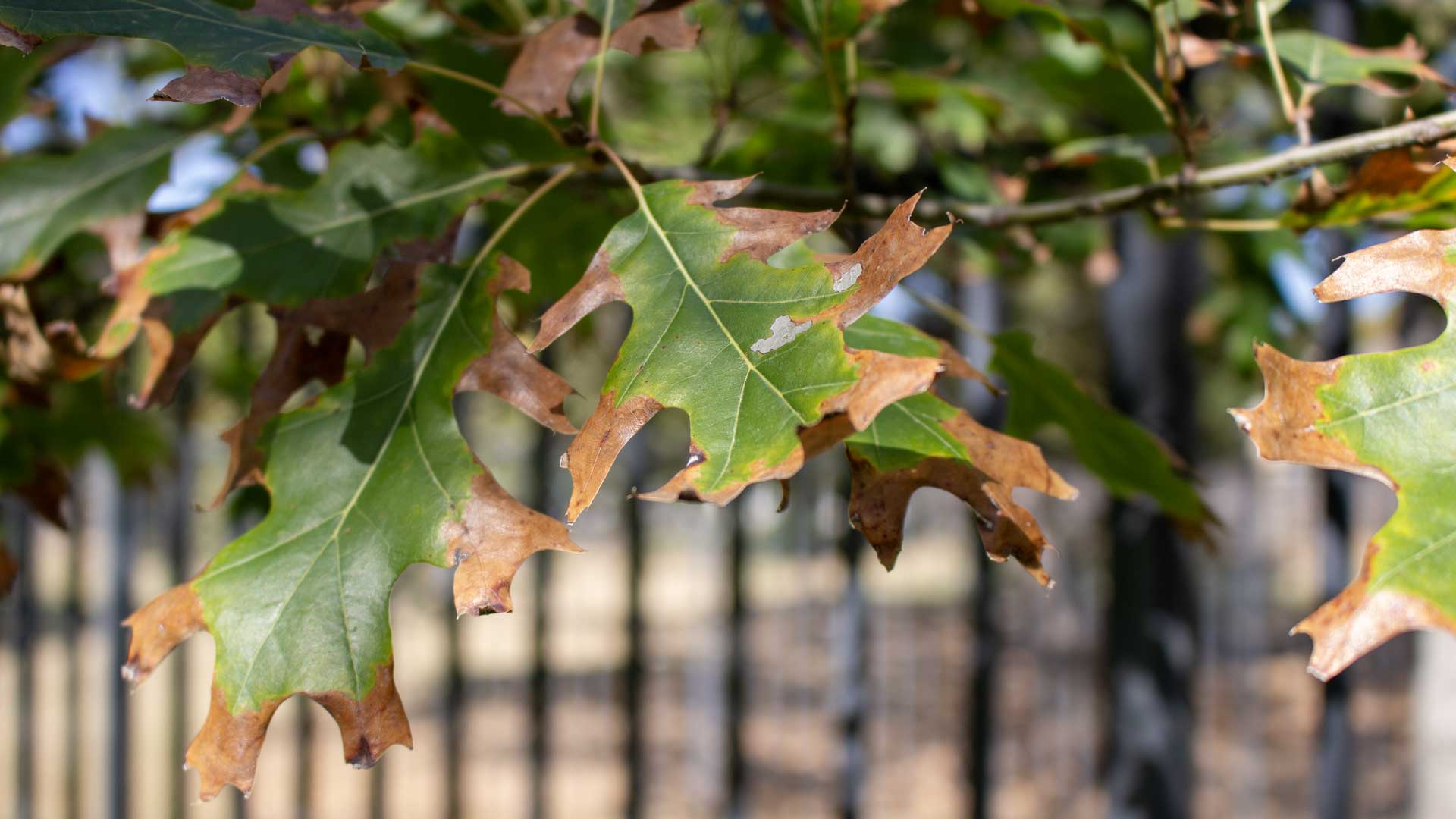
Caring for Trees in a Drought
The summer of 2022 has been difficult for those in North Texas. We’ve had little rain and record-breaking heat. And the weather forecasters say that there’s only more challenging days ahead. Are Your Trees Dying or Just Thirsty? While native trees such as post oaks, cedar elms, and Texas live oaks are designed to handle…
-

Texas Live Oak
Texas live oak (Quercus fusiformis), is found in Texas and parts of Oklahoma and Mexico. Texas Mature Texas live oaks provide deep shade and are extremely heat tolerant. The acorns are sweet and sought out by animals and birds. Common names: Plateau live oak, Escarpment live oak, Interior live oak, West Texas live oak Species…
-

Planting Trees in North Texas After the Hard Freeze of 2021
Choosing a tree that can thrive in the best Hardiness Zone The hard freeze this February was difficult for several tree species in North Texas. If you’re a homeowner in North Texas who lost a tree, you might be considering a replacement. But before you decide on a species, we would recommend that you consider…