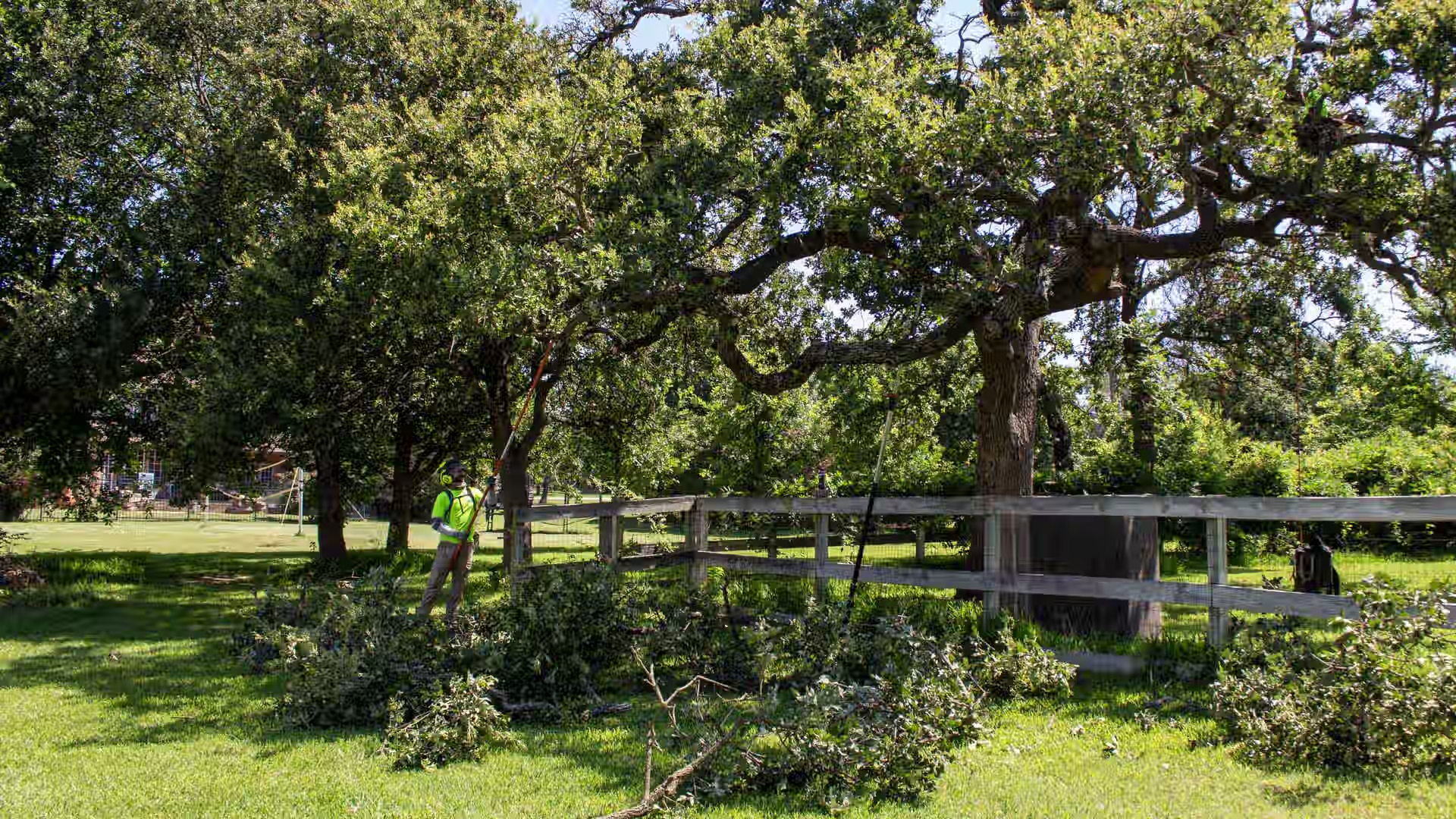
In this post, we’ll interview ISA Certified Arborist John Imperial. John is a consulting arborist at Tree Shepherds with special training in Plant Health Care.
What does the Potato Famine in Ireland have to do with tree care in Denton County?
The root cause of the Potato Famine in Ireland in the 1800s was an oomycete pathogen known as Phytophthora. Phytophthora, or a variety of the pathogen, can cause the decay of fine feeder roots of trees. An infestation of Phytophthora can be very serious, if conditions are not treated or corrected. It can kill a tree quickly, if it is not addressed.
What is the primary cause of Phytophthora?
The spread of Phytophthora, 99% of the time, is due to too much water (in the soil) for prolonged periods, whether that is from overwatering and not allowing the soil to dry out or areas of poor drainage around the trees. Phytophthora needs prolonged moisture to thrive and survive.
What are the symptoms of Phytophthora?
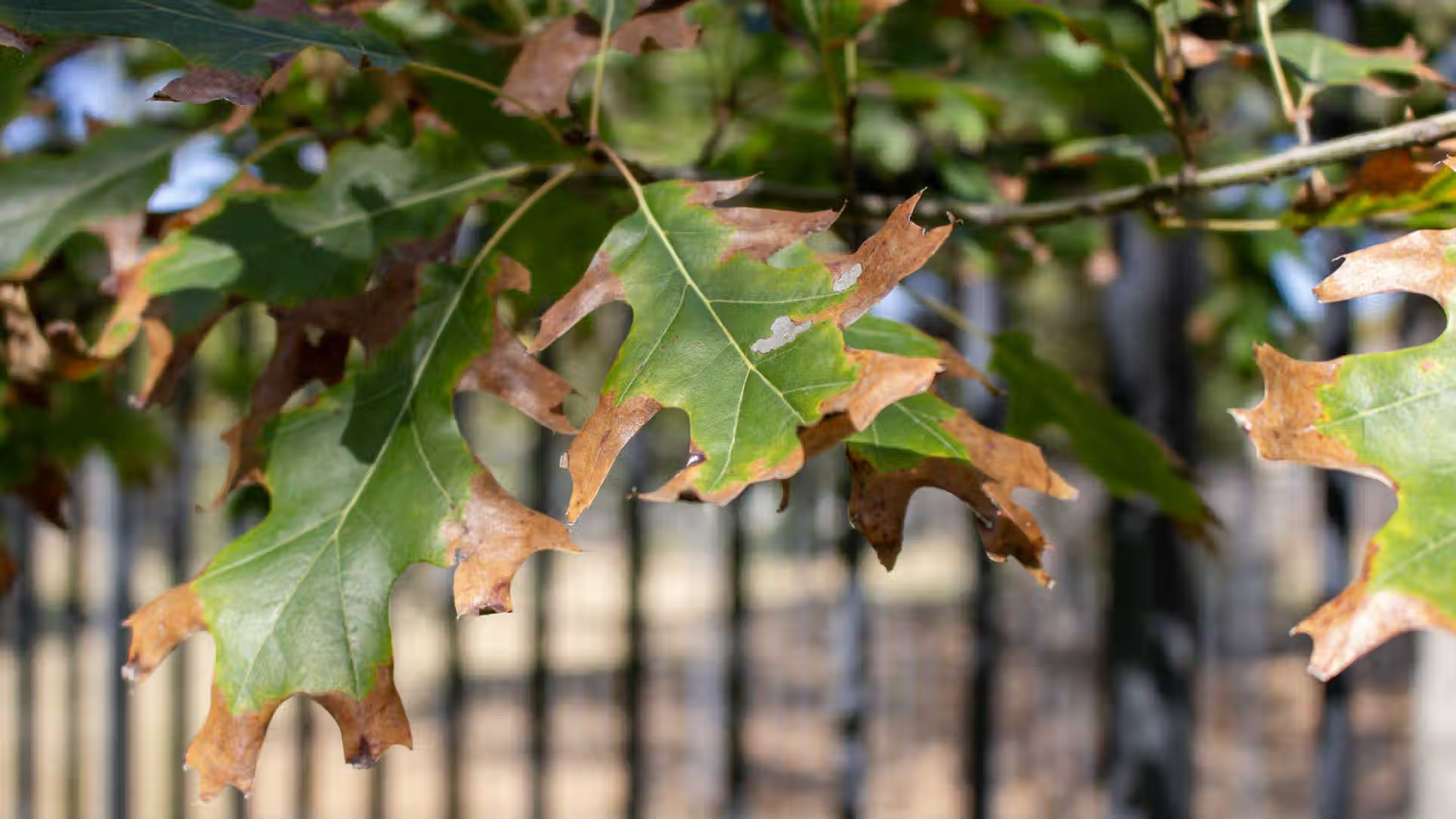
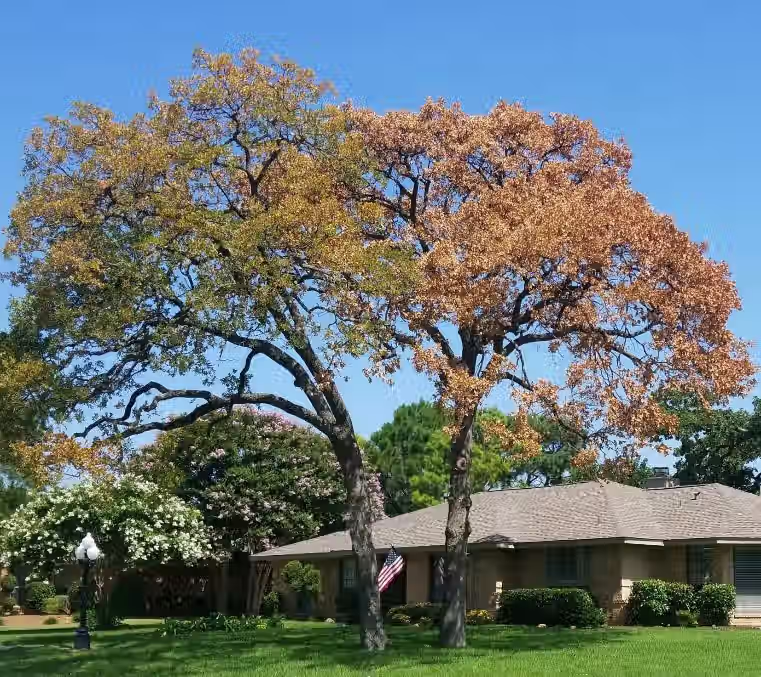
Yellowing in the canopy, followed by browning in those same areas. Some species can manifest “black bleeding” on the trunk known as cankers.
The most significant and definitive symptom is the condition of the roots. Roots that have been affected by Phytophtora are darker in color, flimsy, and lacking of any fine feeder roots.
Phytophthora sets in and affects the tree through the root system. The yellowing of the canopy is a result of what is going on in the soil.
Why are Post Oaks particularly susceptible to Phytophthora?
Post Oaks are native to the area and love to grow in sandy, arid, oxygen-rich soil. So when development occurs around them, such as the care and the daily watering of grass, the soil becomes saturated. This allows Phytophthora to take hold of the root system of the Post Oak.
Post Oaks would much rather not be around human activity and development. They thrive in the woods away from human traffic and landscaping. They are one of the longest-lived trees in this area as well as the most prevalent.
A Post Oak can live to be 200 to 300 years old, if they are in the right conditions. But they have sensitive root systems that need a lot of oxygen. Soil compaction, overwatering, chemical treatments are very hard on Post Oaks. They are very slow to recover from stress to their root systems. The larger the Post Oak the more difficult it is for the tree to regrow the feeder roots that have been damaged or lost.
What is the relationship between Phytophthora and a tree’s need for oxygen?
Roots need oxygen. In the presence of too much water, the roots’ ability to uptake needed oxygen is lowered.
Most people tend to think that trees only need carbon dioxide, but oxygen is just as important to trees as it is to us. The soil really needs oxygen. That is why it is important to let the soil dry out between watering days.
If a tree is infected by Phytophthora, is it even more susceptible to other pathogens or pests?
At Tree Shepherds, we always say that it is never one thing that kills a tree. It is going to be a serious of events. Whatever the primary stressor, it will lower the defense of the tree. Stressors such as overwatering, poor drainage, etc. will open the door for pathogens like Phytophthora to set in.
What can you do to control Phytophthora?
Change your watering practices and your soil drainage. We can implement any number of treatments, but if watering practices aren’t changed, then Phytophthora will just come back.
If there is a severe enough infection in the tree, there are some fungicide options to apply to the soil that will kill off varieties of Phytophthora. But again, proper watering practices and drainage are the most important means of combating Phytophthora and allowing the tree’s root system to get the necessary nutrients it needs to fight off the infection.